
Safe Use of Environmental Agents

What are “environmental” agents?
Household pesticides are regulated as environmental agents under the "Environmental Agents Control Act" by the Toxic and Chemical Substances Bureau (TCSB), Environmental Protection Administration (EPA), Taiwan.
What-What are “environmental” agents?
According to “Environmental Agents Control Act”, environmental agents refer to pesticides, miticides, rodenticides, bactericides/fungicides used for environmental sanitation, and other chemical agents used against organisms injurious to environmental sanitation. A permit is required for the manufacturing, processing and import thereof.
Who-Who can use “environmental” agents?
Environmental agents are distinguished as technical grade environmental agents, general use environmental agents, and restricted use environmental agents in accordance with use concentration and method of use.
Technical grade environmental agents are active component raw materials used to manufacture environmental agent products and the uses thereof are restricted to environmental agent manufacturing enterprises.
General use environmental agents contain less active components and are used in a simple manner. They can be purchased at convenience stores and retailer shops; and be used directly after opening the package.
Restricted use environmental agents are environmental agents with restricted use. Due to the higher concentration thereof, people should wear personnel safety equipment and dilute the environmental agent when using it. Those without a permit are not eligible to sell or use it.
Which-Which are targets of “environmental” agents?
Environmental agents are used to control organisms injurious to environmental sanitation, such as mosquitoes, cockroaches, flies and so on.
Where-The location of using “environmental” agents:
Environmental agents can be used in an indoor or outdoor environment at or nearby home or workplace. The actual uses thereof depend on the location.
Environmental agents shall not be used in or spread on food, animals and plant farms to prevent the contamination of food, food container, feed, crop and livestock.
Principles of selecting and purchasing an environmental agent

1. Be indicative: Confirm the pest on which the environmental agent is used for prevention and control. For example, mosquito repellent is used to control mosquitoes, whereas cockroach medicine is used to kill cockroaches.

2. Be legal: Identify the permit number registered at Environmental Protection Administration (EPA), Taiwan.
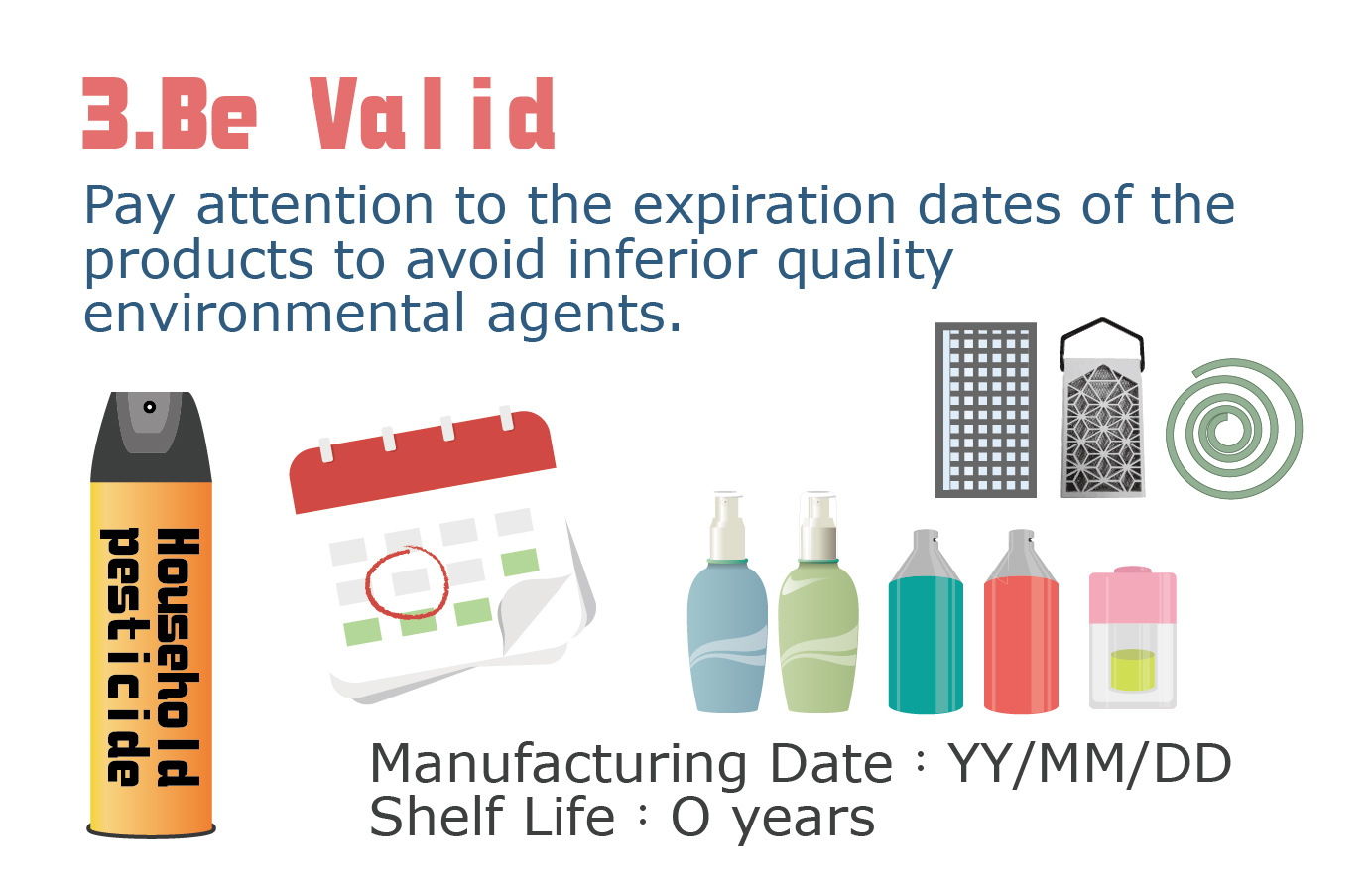
3. Be valid: It is a must to compare the manufacturing date and period of validation printed on the outer package of the product to avoid purchasing inferior quality environmental agents.
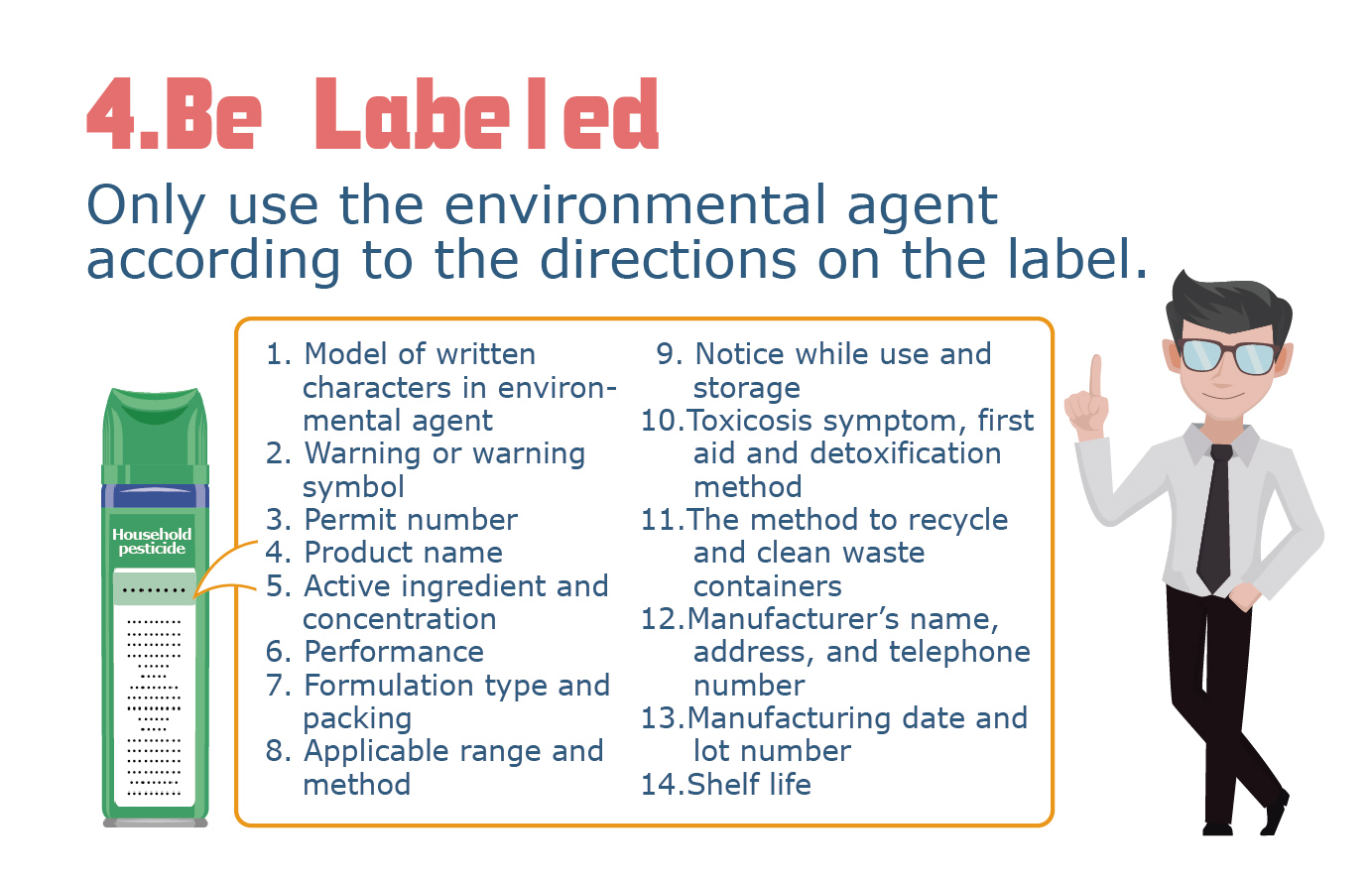
4. Be labeled: Check the labels (on the outer package of the product). Use the environmental agents according to the labels to ensure the uses are safe and valid.
Advocating for the Safe Use of Environmental Agents
Providing information to help the public understand how to select environmental agents safely, and how to check unqualified environmental agents.
Search System for Environmental Agent Permits and Pest Control Operator Services
Providing means by which the public to search for information on registered environmental agents, legitimate pathogen control service providers, and environmental agent suppliers.